
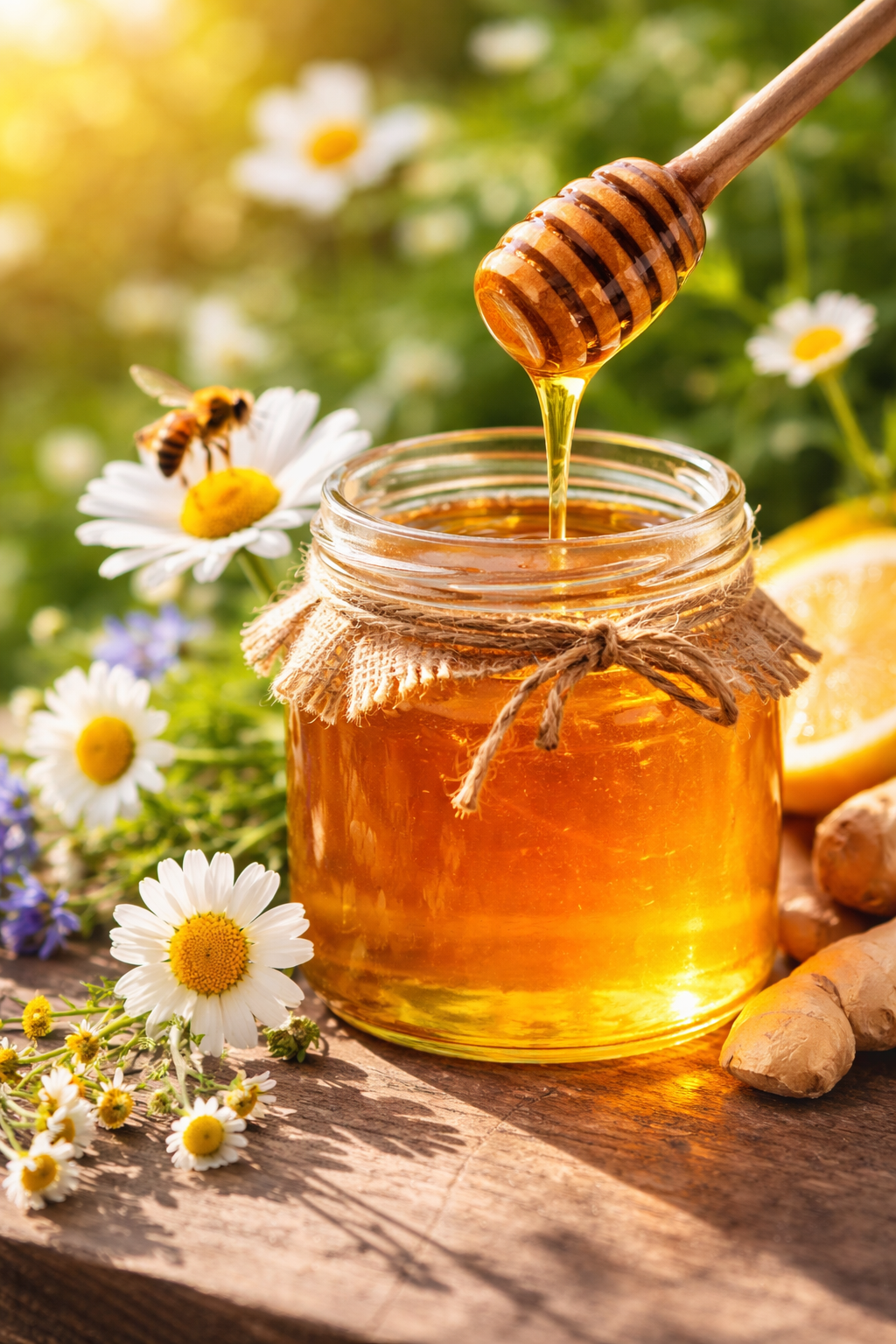
A simple spoonful of honey may be one of the oldest forms of nourishment on Earth. Long before supplements, superfoods, or modern wellness trends, cultures around the world relied on honey not only for sweetness, but for healing. Today, science is beginning to confirm what ancient traditions quietly understood—this golden nectar supports the brain, the body, and the immune system in remarkable ways.
For thousands of years, humans have turned to a small golden jar for nourishment, comfort, and healing. Long before laboratories, supplements, and modern wellness trends, there was honey—nature’s original functional food.
Honey supports brain health, sleep, digestion, immunity, and natural energy production, making it one of nature’s most complete functional foods.
“Honey is more than sweetness—it’s nature’s quiet intelligence, carrying centuries of nourishment and healing in a single spoonful.”
— Coach Michaelene Conner
I have always been fascinated by honey. Not just because it tastes good—but because it quietly appears in the traditions of nearly every culture on Earth. From ancient Egypt and Greece to Ayurvedic medicine in India and remedies passed down in American kitchens, honey has always been there.
It shows up in sacred rituals, healing practices, and family kitchens. Somehow this simple gift from bees found its way into nearly every civilization’s understanding of nourishment and health.
Yet for something so common, most people rarely stop to consider what honey actually does for the body and mind.
Most people think of honey simply as a natural sweetener. But honey is far more complex than sugar. It contains enzymes, trace minerals, antioxidants, and antimicrobial compounds that interact with the body in subtle but powerful ways.
Honey and the Brain
The brain runs primarily on glucose, and honey provides a natural combination of glucose and fructose that the body can use efficiently for energy. When the brain receives steady fuel, neurons communicate more effectively, which can help reduce mental fatigue and support concentration.
Honey also contains plant antioxidants known as polyphenols. These compounds help protect brain cells from oxidative stress.
Oxidative stress occurs when unstable molecules known as free radicals damage cells. In the brain, this process has been associated with cognitive decline and neurological aging.
Research also suggests honey may support the hippocampus, a small structure deep within the brain responsible for learning and memory.
The hippocampus helps convert short-term experiences into long-term memories. Antioxidants in honey may help protect this region from inflammation and cellular stress, allowing neurons to communicate more efficiently.
When neurons communicate well, learning and memory tend to function better.
Honey and Sleep
One of the most fascinating benefits of honey involves sleep.
A small spoonful of honey before bed provides glucose that the liver converts into glycogen. During the night, the brain continues to use energy. If glycogen levels fall too low, the body may release stress hormones such as cortisol or adrenaline to raise blood sugar.
These hormones can interrupt sleep or cause early waking.
A small amount of honey before bed can help stabilize nighttime blood sugar levels, reducing the likelihood that the brain will trigger those stress responses.
Good sleep allows the brain to perform some of its most important maintenance tasks, including memory consolidation and the removal of metabolic waste through the brain’s glymphatic system.
Honey, Mood, and the Gut–Brain Connection
Honey also supports digestive health, and this indirectly influences mood and cognition.
Honey contains mild prebiotic compounds, which feed beneficial bacteria in the gut. These microbes play a major role in the gut–brain axis—the communication network between the digestive system and the nervous system.
Healthy gut bacteria help regulate neurotransmitters such as serotonin, which influences mood, emotional balance, and mental clarity.
In other words, when the gut is healthier, the brain often functions more smoothly.
Honey and the Immune System
Raw honey has long been used as a natural immune support.
It contains antimicrobial compounds that help inhibit bacterial growth. Some types of honey even produce small amounts of hydrogen peroxide when diluted, contributing to their antibacterial activity.
For centuries honey has been used to soothe sore throats, calm coughs, and support recovery from respiratory illness.
Honey and Digestive Health
Honey’s prebiotic properties nourish beneficial gut bacteria that assist digestion and nutrient absorption. Many people find that honey mixed with warm water, lemon, or ginger can soothe stomach irritation and support healthy digestion.
Another fascinating aspect of honey is that the flowers bees gather nectar from influence the honey’s nutritional profile. Darker honeys such as buckwheat honey tend to contain higher levels of antioxidants, which help combat oxidative stress and support overall health.
Manuka honey, produced in New Zealand and Australia, contains a compound called methylglyoxal that gives it particularly strong antibacterial activity. This is one reason it is often used for immune support and wound care.
Lighter varieties such as acacia honey have a mild flavor and a slightly gentler effect on blood sugar. Meanwhile, local wildflower honey contains a diverse range of plant compounds depending on the blossoms bees visit.
Although each variety has its own characteristics, nutrition professionals often recommend raw, minimally processed honey because it retains the natural enzymes and beneficial compounds that make honey so valuable.
Honey and Tissue Repair
Another remarkable property of honey is its ability to support wound healing.
Medical-grade honey is sometimes used in hospitals to treat burns and wounds because it helps maintain a moist healing environment, limit bacterial growth, and support tissue repair.
This healing quality explains why honey appears so frequently in traditional medicine across cultures.
Honey and Natural Energy
Because honey contains both glucose and fructose, it provides both immediate and sustained energy.
Some endurance athletes use honey as a natural alternative to synthetic sports gels because it replenishes glycogen stores without artificial additives.
A Spoonful of Nature’s Intelligence
In the end, honey reminds me that some of the most powerful things in nutrition are also the simplest.
A jar of honey is the result of thousands of bees working together, transforming nectar into something that nourishes not only the hive—but us as well.
It is sweet, yes.
But it is also a quiet example of how nature often combines nourishment, healing, and wisdom in a single spoonful.
Coach Michaelene Conner is a nutritional strategist and performance coach specializing in weight management and athletic performance. She is also the author of Good Brain, Bad Brain, Your Brain, available on Audible and Amazon Books.
Learn more at coachconner.com.